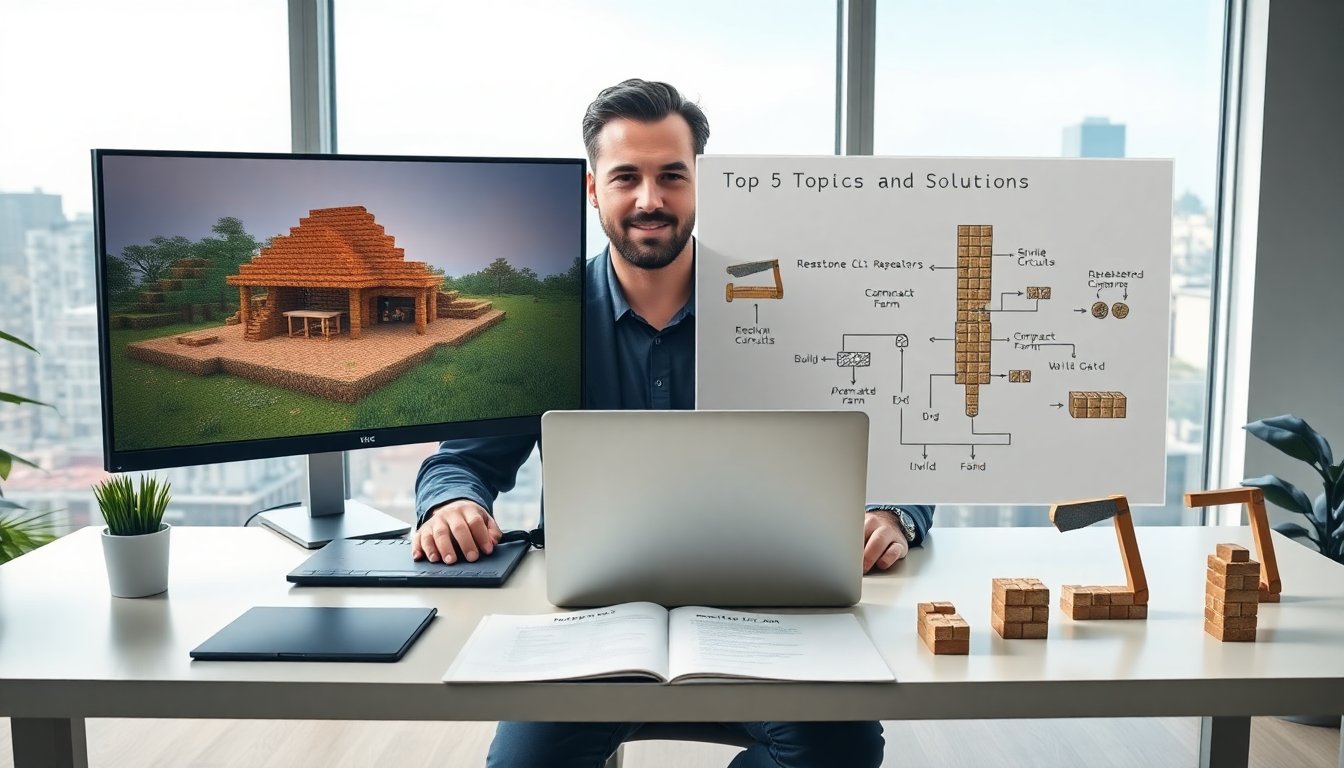
minecraft games topicsolutions help players learn core skills fast. This guide lists five key topics and solutions for practical play. It gives clear steps for survival, redstone, farms, and building. It helps players reduce time wasted and increase rewards. It suits new players and experienced builders who want direct, usable tips.
Key Takeaways
- Mastering survival essentials in Minecraft games topicsolutions starts with efficient resource collection, food security, and building protective shelters.
- Utilizing redstone and automation helps players save time by automating tasks like ore smelting, item sorting, and farming near the base.
- Understanding simple redstone circuits—repeaters, comparators, and clocks—enables effective control over automated systems and timing.
- Organizing resources and carrying essential items like torches and shields ensures steady progress and reduces risks during gameplay.
- Planning builds with a limited material palette and adding aesthetic details like layered walls, lighting, and quick styling tricks enhances the visual appeal and functionality.
Survival Essentials: Resources, Food, And Early Shelters
Survival starts with resource collection. The player gathers wood, stone, and coal in the first minutes. The player crafts basic tools: wooden pickaxe, stone axe, and a furnace. The player secures food by killing passive mobs, fishing, or farming seeds. The player plants wheat, carrots, or potatoes near water. The player stores food in a chest and cooks meat in a furnace.
Shelter must protect from hostile mobs. The player digs into a hillside or builds a small wooden hut. The player places torches, a door, and a bed. The player crafts a craft table and furnace inside the shelter. The player mines down for iron and coal after the first night. The player upgrades tools and armor with iron when available.
Resource management saves time. The player organizes items in labeled chests. The player keeps a stack of torches, extra tools, and blocks for emergency builds. The player carries a water bucket for lava and a shield for combat. These small steps reduce risk and keep progress steady.
Redstone And Automation: Practical Concepts To Save Time
Redstone lets players automate repetitive tasks. The player learns three core elements: power source, transmission, and output. The player uses redstone dust to link switches and devices. The player uses levers, buttons, and pressure plates as triggers. The player places repeaters to extend signal range and to delay signals. The player tests circuits in creative mode before building long runs.
Automation yields steady resources. The player automates ore smelting, item sorting, and simple farms. The player builds compact designs near the base to reduce travel time. The player uses hoppers to move items and comparators to read container levels. The player adds a redstone lamp or indicator to check machine status at a glance.
Simple Circuits: Repeaters, Comparators, And Clock Basics
A repeater repeats and delays redstone signals. The player places repeaters to extend a signal past 15 blocks. The player adjusts repeater ticks to control timing.
A comparator compares container contents and emits a signal strength. The player uses comparators for item sorting and automatic smelting control. The player reads container signal strength to trigger dispensers or hoppers only when certain amounts exist.
A clock produces a repeated pulse. The player builds a simple hopper clock or redstone torch clock for steady pulses. The player uses a clock to feed items into furnaces or to trigger dispensers at regular intervals. The player pauses clocks with a lever when maintenance is needed.
Building And Aesthetics: Planning, Materials, And Quick Styling Tricks
Good builds start with a plan. The player sketches a layout or marks foundations with temporary blocks. The player chooses materials that fit the theme: stone and oak for rustic, quartz and concrete for modern. The player limits material palette to three main blocks and two accent blocks.
The player adds depth with layered walls and stairs. The player uses stairs and slabs to avoid blocky edges. The player places windows and balconies to break flat surfaces. The player uses lighting to highlight details and to prevent mob spawns.
Quick styling tricks speed progress. The player adds vines or leaves for soft texture. The player places item frames and banners to add color and function. The player uses roof overhangs and trimmed corners to make structures look finished. The player tests builds at different distances to check silhouette and readability.